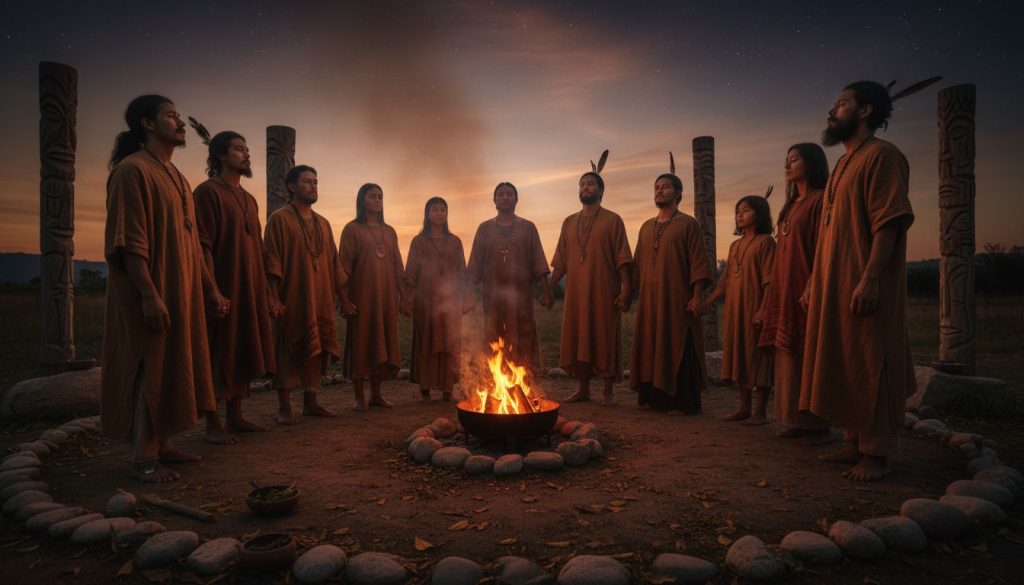
Across many Indigenous communities, ceremony is not being treated as a relic of the past. It is being reclaimed as living medicine. In recent years, Native communities in the United States have been reviving sweat lodges, talking circles, healing circles, music-based traditions, grief gatherings, and tribe-specific spiritual practices to respond to historical pain that has traveled through families for generations. This movement speaks to a deep truth many traditional healers have always known: when trauma enters through broken identity, separation, silence, and spiritual disruption, healing must also reach the spirit.
For readers in South Africa and beyond, this subject carries a familiar lesson. Whether one speaks of Indigenous ceremony in North America or ancestral healing in African traditions, people often begin to mend when they reconnect with sacred practices, elders, land, prayer, and communal belonging. Reclaiming ceremony is not simply about remembering old customs. It is about restoring dignity, reawakening power, and creating a path for families to break cycles of grief, addiction, disconnection, and emotional suffering.
The meaning of intergenerational trauma
Intergenerational trauma refers to pain that is passed from one generation to the next through lived experience, family dynamics, collective memory, and social conditions. In Native community reporting and health literature, this trauma is often linked to the loss of land, language, food systems, identity, spirituality, ceremony, and kinship structures. These losses do not disappear when one painful event ends. They echo in parenting, relationships, self-worth, mental health, and community trust.
Recent Native health reporting in 2025 described historical trauma as rooted in the loss of culture, people, community, land, identity, language, cosmology, and spiritual practice. That description is important because it shows that trauma is not only psychological. It is also spiritual and communal. When sacred ways are interrupted, people can feel cut off from purpose, ancestry, and belonging. This kind of wound often requires more than standard therapy alone.
Many survivors and elders have made it clear that they want to break these cycles. A qualitative study involving older adults experiencing homelessness found that participants wanted to use their lived experience to stop intergenerational trauma from continuing. Their voices remind us that healing is not passive. It is an act of courage, intention, and collective responsibility. Communities do not merely survive trauma; they can also transform it.
Why ceremony matters in trauma healing
Ceremony offers something that many modern systems struggle to provide: meaning. A healing ritual can hold grief, memory, prayer, community witnessing, and spiritual reconnection all at once. For people carrying inherited pain, ceremony can create a safe and sacred container where suffering is acknowledged, ancestors are honored, and identity is restored. This is one reason cultural reconnection is so often described as healing.
A 2024 article on boarding-school legacies captured this power in a simple phrase: culture is cure. That idea has been repeated across Native reporting because it reflects lived experience. When communities bring back songs, circles, fasting practices, cleansing rituals, storytelling, and other traditional forms, they are not just preserving heritage. They are activating protective forces that strengthen emotional resilience and spiritual grounding.
There is also growing evidence that traditional ceremonial practices can help reduce substance-use harms linked to historical trauma. A systematic review found that American Indian and Alaska Native communities are restoring or strengthening ceremonial practices to promote spiritual and emotional healing while helping address problem substance use. In this way, ceremony becomes both remembrance and remedy. It protects culture, and it supports recovery.
Communities reviving traditional practices today
Across Native communities, the revival of ceremony is taking practical and organized forms. Ceremonies such as sweat lodges, healing circles, talking circles, and culturally specific gatherings are being used alongside community education, peer support, and family-centered healing programs. This is not a vague spiritual trend. It is a grounded response to generations of loss, grief, and displacement.
One clear example is the 2024 launch of a renewed “Mending Broken Hearts” workshop by the White Buffalo Recovery Center. The workshop was described as culturally informed, bimonthly, and designed to help Native families heal together through grief, loss, and intergenerational trauma. That family-centered approach matters deeply. Trauma often spreads through households and bloodlines, so healing must also involve relationships and shared understanding.
Review literature on Native trauma interventions has also pointed to earlier models such as Return to the Sacred Path and healing circles, which combined traditional spiritual practices with psychoeducation and counseling support. This blending of structure and sacred practice shows wisdom. Communities are not forced to choose between emotional support and ceremony. Instead, they are shaping healing models that respect both the mind and the spirit.
Traditional healing entering health systems
One of the most significant developments in recent years is that traditional healing is gaining recognition inside public and behavioral health systems. Research on Native communities shows that ceremonies such as sweat lodges, healing circles, and other culturally specific practices are increasingly being used alongside, or in some cases instead of, Western clinical models. This reflects a growing understanding that tribe-specific healing may be more meaningful and effective for many community members.
In 2024, a major policy shift was reported in four U.S. states: California, Oregon, New Mexico, and Washington expanded Medicaid coverage to include traditional healing supports for Native patients. Covered approaches included music therapy, sweat lodge, talking circles, and other culturally rooted practices. This is more than an administrative update. It signals that health institutions are beginning to acknowledge that spiritual and cultural healing deserve formal support, not just informal respect.
Community-based policy shifts like this may broaden access to ceremony-based healing for people who previously faced financial or systemic barriers. When a health system funds traditional care, it sends a powerful message that ancestral practices are not inferior or outdated. They are legitimate pathways of wellness. For many families, this recognition can help remove shame and encourage a return to trusted sacred ways.
The power of combining ceremony with structured care
Reclaiming ceremony does not mean rejecting every modern support system. In many places, the strongest models are those that combine traditional healing with organized care, counseling, recovery planning, and maternal health support. This integrated approach honors the full person. It speaks to , mind, emotions, family, and spirit without forcing people to divide themselves into separate pieces.
The 2025 CEREMONY implementation study offers an important example. Developed in partnership with Sacred Circle Healthcare, it describes an integrated perinatal substance-use care model for Native pregnant people that is built around cultural connection and recovery support. The model reflects a broader movement toward culturally grounded services that do not treat spirituality as an optional extra. Instead, culture and ceremony are placed close to the center of healing.
This approach echoes what many traditional healers understand well: a person heals more fully when care is aligned with identity and belonging. Structured support can help with safety, continuity, and access, while ceremony restores meaning, sacred order, and ancestral connection. Together, they can create a more powerful pathway for those carrying trauma, especially in times of transition such as grief, addiction recovery, pregnancy, and family rebuilding.
Global recognition of Indigenous and traditional healing
The renewed respect for ceremony is not limited to local communities. Public health and international institutions are also beginning to acknowledge the value of traditional and Indigenous healing systems. WHO-linked guidance on mental health and psychosocial support in emergencies includes local, informal, traditional, Indigenous, complementary, and alternative healing systems. This language matters because it affirms that healing knowledge exists beyond standard biomedical frameworks.
Recognition is also visible in international Indigenous rights spaces. At the 25th session of the UN Permanent Forum on Indigenous Issues in 2026, the opening included a ceremonial welcome, and the session materials referenced intergenerational and historical trauma within Indigenous rights discussions. Such moments may seem symbolic, but symbols are powerful. They show that ceremony belongs in serious conversations about justice, memory, and collective healing.
For communities that have long had their sacred practices suppressed or dismissed, this wider recognition can feel like an opening. It does not replace local authority or elder wisdom, but it can strengthen advocacy, funding, and visibility. Most importantly, it helps confirm what communities have long known: traditional healing carries wisdom that can mend lives, families, and nations.
Lessons for families seeking restoration
The revival of traditional practices offers a lesson that reaches far beyond one region. Trauma often grows where people are cut off from who they are. Healing begins when they return to truth, connection, and sacred rhythm. For families struggling with grief, conflict, addiction, emotional heaviness, or repeating painful patterns, ceremony can help restore a sense of spiritual order. It reminds people that they are not alone, forgotten, or permanently broken.
This does not mean every person will heal in the same way. Some may begin with a circle, a prayer, a cleansing ritual, or guidance from an elder or healer. Others may need both spiritual support and formal counseling. What matters is that healing is rooted in respect, authenticity, and community. People are often strengthened when they are seen not as isolated problems to be fixed, but as souls connected to family, ancestry, and purpose.
In a South African context, this message resonates strongly. Many people already understand that when relationships collapse, luck disappears, or sorrow follows a family line, the answer may require spiritual restoration as well as practical effort. Reclaiming ceremony teaches us that sacred traditions are not a weakness. They are a source of power. They can help individuals and families call back peace, clarity, reconciliation, and renewed life.
As communities revive ceremony to mend intergenerational trauma, they are doing more than preserving heritage. They are rebuilding the bridge between past and future. Through sweat lodges, healing circles, grief workshops, cultural songs, and other sacred practices, people are finding language for pain that once remained unspoken. They are also finding strength, identity, and belonging where trauma once created silence and disconnection.
The message is reassuring and profound: what was wounded through spiritual disruption can also be healed through spiritual return. When communities reclaim ceremony, they reclaim authority over their own healing. They remind the world that tradition still lives, ancestors still matter, and sacred practice still has the power to restore hearts, families, and generations.
